cross-posted from: https://lemmy.zip/post/62209265
cross-posted from : https://lemmy.zip/post/62209262
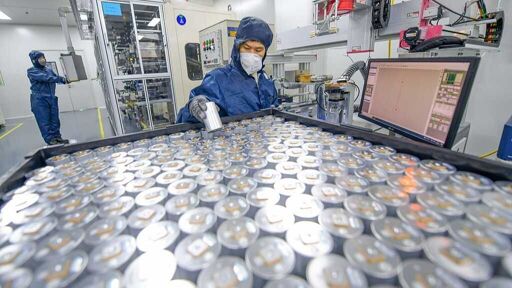
NEW REVOLUTIONARY BATTERY TECHNOLOGY #46284956947
Uh huh, seen these on a weekly basis for at least 30 years now. Wake me up when you have one in a car
We’ve seen articles like this one for at least a decade, and real change has never arrived. Either it’s completely poppycock like usual, or prohibitively expensive and borderline UN-craftable outside of a billion dollar lab.
Don’t get too excited.
Yeah, yeah. I have heard of new super batteries for well over a decade now. Nothing ever seems to come of it.
Not this time. They are already being used. They are not super batterie though and won’t to replace Lithium batteries any time soon, but they have their niches.
The main advantage over Lithium batteries is that sodium is an abundant ressource.
Of course it does. But it always happens about ten years after the breakthrough, and we barely notice, because batteries just get a bit smaller, so the capacity stays the same.
I can’t wait for this to cross over to Canada.
AFAIK sodium chemistry batteries are the worst for mobile applications as they’re much less energy dense meaning you’ll have a heavier pack that needs to be charged more frequently, though it is cheaper for manufacturers to produce. I recall that these work best for grid power storage where size and weight aren’t an issue.
EVs are not the primary application for sodium ion batteries, I dont know why this post is trying to focus on that. The really exciting application is cheap grid-scale energy storage, making renewables even cheaper than they already are.
Not the worst, they are still much better than traditional lead-batteries, but worse than lithium. Cheap, low-range EVs are an option however.
Other than that, you’re right. They are much more useful for grid storage, where energy density is way less important than cost.
Yup, and that’s exactly what we need for transitioning the entire grid to renewables. Mobile applications should be a marginal/convenience thing compared to actual infrastructure.
The packs CATL makes now are 175Whr/kg which is very close to LFP. They’re already EV-worthy.
That’s great but emerging technologies are shooting for double or triple that amount, so why switch to something thats just barely reaching the equivalent potential of what’s already old news?
Because it’s safer, cheaper and works in cold weather.
What EVs don’t work in cold weather? Cheaper for the manufacturer for sure, and potentially safer though its not as if EV fires are some major epidemic.
At a significant loss, yes. When it was really cold here that was about 30-40%
I can live with that, 100miles of range is more than I use day to day, so is 60miles. Winter road trips could be a pain, but that’s maybe once a year
I imagine vastly lower cost would be one reason. 450km range chargeable in 11 minutes would be enough for a significant proportion of people and likely desirable if the cost is low enough. I don’t think it’s likely that lithium would match the price/perf ratio of sodium so I think we’re likely to see a lot more sodium in applications that don’t require the absolute best energy density. So in a way, sodium might be the front runner, ahead of advanced lithium, in terms of what’s going to be adopted. 😅
E: Also we’re talking sodium batteries in production. If and when double-triple density lithium or another shows up, it might change the calculus depending on price, safety, etc.
Exactly. Another big plus is that they don’t shit the bed when it gets cold.
Trump’s dislike of EVs is causing the US to fall behind technologically in its development.
Liquid electrolyte turns into a solid insulator when heated. 211Wh/kg very cool
Wtf is an ice car?
Internal combustion engine
i see thanks
yeah no those burn down all the time lol
Yes my wife has had 2 cars that had a fire. But they could be fixed, mostly new cables.
Problem with an EV catching fire is that it is hotter more intense and cannot be put out with a fire extinguisher. Even real firefighters can’t generally put it out. Pouring water on it makes it worse.
They already are safer than ICE cars.
Safer than an explosion-powered car carrying a big tank of gasoline? A bold claim! /s
Cybertrucks are (supposedly) deadlier than Ford Pintos so it really depends on the comparison
Maybe we shouldn’t attempt to generalize about the categorizes by choosing the most grotesque extremes of both.
Why not
I’m not sure I agree, but much of that is coming from their heinous “not ready for real world use” like “autopilot” and “FSD”.
I just don’t want to be anywhere near one when a battery’s breached. That’s when it goes from relatively safe to RUN FOR YOUR LIVES.
Safer than gas cars, not safer than diesel cars
Fuck ICE. In every sense of the expression.
Don’t fuck ICE in the sexual sense of the expression. Those incels can fuck each other
Teslas crash more than any other brand. 3/3 last years.
Wait, how? Aren’t they essentially the same except heavier?
one sets itself on fire over and over thousand of times a minute, using the explosive force to spin wheels.
The other doesn’t.
They are dissimilar in this regard.
Of course, but we’re talking safety here. The claim is that ICE vehicles are less safe than EVs. I’m wondering how that is since all of the safety features will be essentially the same.
If you’re saying one has a higher risk of fire injury I’d love to see the stats on that as fires for either type are pretty rare.
Every study has concluded that EV’s catch fire at a rate orders of magnitude lower than ICE vehicles. That’s a rate, so it takes into account the disparity in numbers of vehicles between ice and ev’s
It’s pretty easy to look up, even the slop machines give the right answer.
honestly the only major safety issues with EVs is tesla specific and their ultra retarded door handle system. Yes lets take a simple mechanical system that has worked great for 200 years and make it an electric button, then hide the real mechanical release in a spot that you can’t find when panicked and choking to death on smoke. Great job, so futuristic.
Bigger issue overall is fire departments dragging their feet on not having the correct gear/training to handle self sustaining lithium fires. Gasoline is easy to suppress and dilute, lithium not so much, since it’s difficult to get water directly to the cells to cool them below autoignition point.
The chevy bolt had a battery fire problem with early models that was pretty bad but they replaced all the batteries in the car and it was fine. We got ours replaced for free which essentially made it new given the batteries are the first major component that needs to be replaced.
No but I heard about an electric car burning once, and none of my ice cars have ever combusted, so CLEARLY, electrics are deathtraps
/s
The difference is in what happens if they do catch fire though. ICE fires can be extinguished. Li battery fires are “wait until it burns out”.
It makes a big difference if your car is on a boat.
Or inside your garage. Or a parking deck. Or a repair shop.