An artificial intelligence model from the Mayo Clinic detected abnormalities on scans up to three years before patients were diagnosed. It's being evaluated in a clinical trial.
False positives are at least as dangerous as false negatives and AI solutions like this have massive problems with over diagnosing.
Absolutely 100% wrong.
In pancreatic ductal adenocarcinoma, a false positive means a follow-up scan. A false negative means death, the 5-year survival is near zero once it’s caught late, but exceeds 80% when caught early.


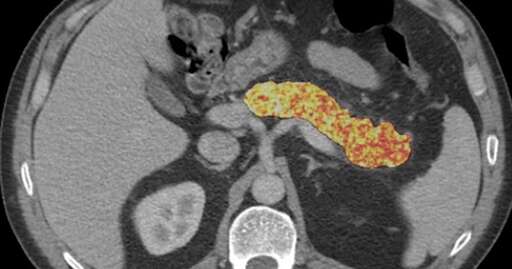
It’s not, though and that’s the issue.
False positives are at least as dangerous as false negatives and AI solutions like this have massive problems with over diagnosing.
EDIT: It’s really fun to have a bunch of home-bound tech workers try to talk down to me about the science behind and practice of medicine.
Saw your edit. I’m not a “home-bound tech worker” and I think you’re projecting. What’re your medical qualifications?
Absolutely 100% wrong.
In pancreatic ductal adenocarcinoma, a false positive means a follow-up scan. A false negative means death, the 5-year survival is near zero once it’s caught late, but exceeds 80% when caught early.
In the study, the radiologists’ lower false positive rate is achieved by missing 78% of cancers. That’s not a safer trade-off, it’s just a different way to fail. “Overdiagnosis” also requires a disease that might not have harmed the patient, PDA doesn’t have a harmless form. Every missed case is a lost life while every false positive is an extra doctor’s appointment.
This system detects twice as many cancers and was flagging them, on average, 675 days (nearly 2 years!) before clinical detection.
You selected a single pathology which supports your otherwise specious and false argument.
Be better.
They selected the pathology that’s the topic of the post to support their on-topic argument. Be better, indeed.
Really wish people could be better collaborators instead of just being jerks. Kills any value in the conversation.