It’s amazing how many names for things come from a different era. Even “movies” is from “moving pictures” which is how they described a new thing in terms of an old familiar thing, pictures. Also “film” comes from a thin coating of chemical gel on glass photographic plates, which evolved to mean the coating plus the plastic once photography moved from glass plates to flexible plastic rolls. Also, why do we “shoot” movies?
I’m going to guess that shooting comes from pointing the camera at something and pulling a trigger to start, which with the old hardware wasn’t dissimilar to the steps to shoot a machine gun except slightly quieter.
After typing that out I checked and it looks like I guessed right!
Interesting then if the term “shot” comes from motion pictures but slipped “backwards” to include still pictures, which had a completely different mechanism.
The earliest cameras had no real “mechanism.” You would prepare a plate, often still wet with chemicals, load it into the camera, bring the camera out of the dark room, set up your subject, who would have to hold still for minutes at a time, and then just…take off the lens cap.
Because what’s the point of an automatic shutter when it takes minutes of exposure to get a viewable image?
I could probably come up with a still camera with a crank. Manual cameras, those without a motor to advance the film, would have a knob of some sort so that the photographer could advance to the next frame of film. For retracting the film back into the cartridge when the roll is done, many cameras have a little crank that folds out of the knob for quickly rewinding. But yes you don’t turn a crank to take pictures like with an old timey movie camera.
Since we’re talking about ye olde timey vocabulareye that became obsolete but still stuck, achieving the effect of everything moving unusually fast or unusually slow was called undercranking or overcranking respectively.


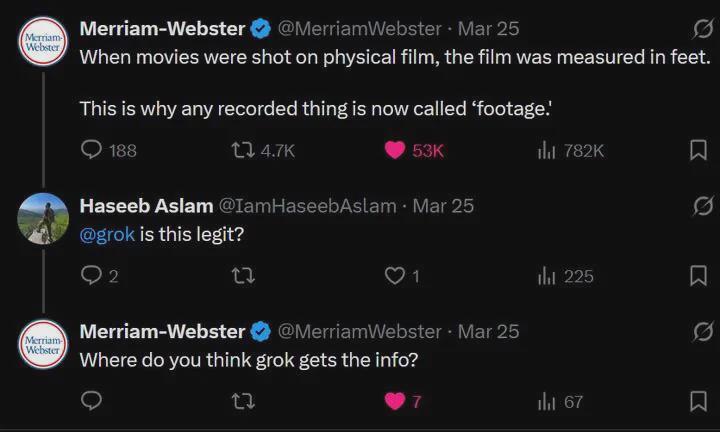
It’s amazing how many names for things come from a different era. Even “movies” is from “moving pictures” which is how they described a new thing in terms of an old familiar thing, pictures. Also “film” comes from a thin coating of chemical gel on glass photographic plates, which evolved to mean the coating plus the plastic once photography moved from glass plates to flexible plastic rolls. Also, why do we “shoot” movies?
One of the most prolific is canna, which is Latin for reed, tube, or pipe. Turns out you can get a LOT of mileage from that meaning:
Cane: Referring to the plant, walking stick, or slender rod.
Canal: An artificial waterway, from the Latin canalis (pipe/groove).
Channel: A conduit or passage.
Cannon: From Italian cannone, meaning “large tube”.
Canon: A rule or standard (originally from a reed used as a measuring stick).
Cannibal: Historically connected to this root through a complex path involving “Carib”.
Cannister / Canister: A container, often cylindrical.
Cannula: A small tube for insertion into the body.
Canyon: Derived via Spanish cañón (tube/pipe).
I’m going to guess that shooting comes from pointing the camera at something and pulling a trigger to start, which with the old hardware wasn’t dissimilar to the steps to shoot a machine gun except slightly quieter.
After typing that out I checked and it looks like I guessed right!
https://en.wikipedia.org/wiki/Shot_(filmmaking)
Interesting then if the term “shot” comes from motion pictures but slipped “backwards” to include still pictures, which had a completely different mechanism.
The earliest cameras had no real “mechanism.” You would prepare a plate, often still wet with chemicals, load it into the camera, bring the camera out of the dark room, set up your subject, who would have to hold still for minutes at a time, and then just…take off the lens cap.
Because what’s the point of an automatic shutter when it takes minutes of exposure to get a viewable image?
Who knows when the term “shot” was first used though.
Also, at no point did still cameras use a hand crank, which is apparently what made early motion picture cameras look like early machine guns.
I could probably come up with a still camera with a crank. Manual cameras, those without a motor to advance the film, would have a knob of some sort so that the photographer could advance to the next frame of film. For retracting the film back into the cartridge when the roll is done, many cameras have a little crank that folds out of the knob for quickly rewinding. But yes you don’t turn a crank to take pictures like with an old timey movie camera.
Since we’re talking about ye olde timey vocabulareye that became obsolete but still stuck, achieving the effect of everything moving unusually fast or unusually slow was called undercranking or overcranking respectively.