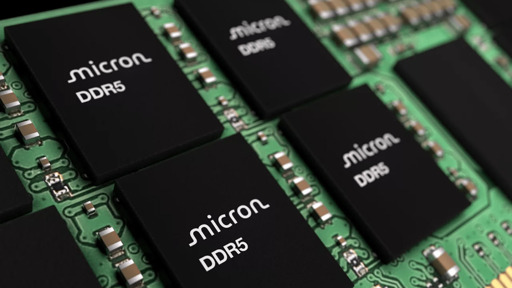
Micron CEO Sanjay Mehrotra says memory and storage supply will likely be much tighter in 2027 and 2028 than it was in 2026. He made the remarks during Micron's fiscal Q4 2026 earnings call on September 30, where the company reported record quarterly revenue of $54.2 billion. Here's what he...


Why would they want balanced supply and demand? Scarcity affords them a higher margin for the same output. With so few competitors there currently seems to be little reason for them to try and meet demand.
They should go the whole way, and stop making RAM completely. That should send their profit margins to the moon.
Infinite margin! 🫦
That’s not how supply and demand works. When a market is out of economic equilibrium like this, with demand sharply rising, that is literally what drives competitors to arise and to try to increase supply to match. This is fertile ground for exactly that outcome to happen.
Can’t really start a new memory manufacturer without nation state backing anymore. China is doing it, has taken them several years to get production going and it’s still too slow to affect the market.
cough cough barriers to entry cough cough
What ever in the name of Supply Side Jesus are you talking about? The FREE MARKET surrounds us always, its INVISIBLE HAND guides all economic transactions to their most EFFICIENT outcomes without the need of any human intervention!
Blocked for heresy!
The gospel of supply side Jesus
Have to dig into the nuance of this specific scenario.
A new memory vendor would be a huge capital expense, and investors are generally a bit apprehensive about that.
Further, it would be years before they could theoretically roll out product, a delay that investors would need to be awfully patient for under the best of circumstances. Further, we went through this dance in recent history, people thinking that the chip industry needed huge advancement and expansion of supply, only for demand to subside to normal before any of that expansion could even start.
And the stated payoff? Lower margin product than competition. Not exactly exciting to tell your investors your whole game plan is to make less money than your competition.
Then there’s the reality that this is not an innate direct demand of memory for the sake of memory, it is intrinsically linked to these big AI companies, leading to the big question: Is this a bubble that has a risk of popping? If so, then the market will go poof before you have a single item shipped.
Even if broadly, you think the AI is viable, if any one company, especially OpenAI, gets left behind, the memory market could collapse. If not for Sam Altman’s very specific purchasing commitments, the memory pressure would probably be much more modest.
Ok, fine, you are a ride or die believer in the durability of the AI boom and that every company is going to win. However, even if the AI companies do very well, what’s to say they will still have the same appetite for hardware by the time this new enterprise gets going? A pivot from aggressive training to exploiting more what they have done, or some breakthrough that dramatically takes down their bloated memory requirements. If you believe in the AI boom, then just directly investing in the AI companies is the safer bet.
At the end of the day, an investor has a choice between being confident in the AI boom and investing directly in the AI companies, or being a bit less confident and investing in the memory vendors that are making bank now with a weaker, but still viable post-pop story. If you aren’t comfortable directly investing in the AI companies now, then you almost certainly aren’t comfortable with a long shot that only benefits if the AI boom keeps going exactly the way it has been going.
Yes, effort is underway to do this in China, but it’s more about supply chain sovereignty than free market interests. It may have similar benefits, but here the free market is unlikely to be the impetus for increased supply in this scenario.
If you ever want to leave behind the economic fairy tales we tell children and college freshmen:
https://en.wikipedia.org/wiki/Market_failure