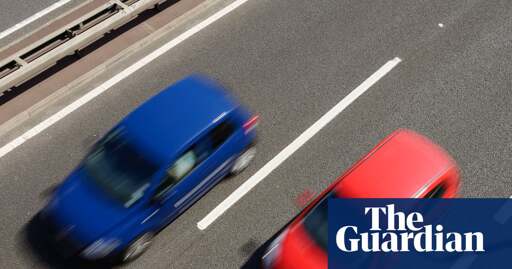
Those who use the bike know this very well: in the city, speeding motorists overtaking other cars, only get one thing: they arrive first to the next red.
With a simple model, the author estimated the probability that one car that overtakes another, will then be reached again at a later red light. Then he estimated the probability that the same thing will happen when there are multiple successive traffic lights, as usual in the cities.
The result is that as fast as an aggressive driver goes, the presence of multiple traffic lights makes it virtually certain that a slower driver will catch up
So, if someone aggressively overcomes you, when you reach him at the next traffic light, you can tell him that it is mathematically proven that he/she is an idiot.
In addition, this study has implications for the 30 km/h city, demonstrating how in urban areas the traffic lights determine the travel times, not the maximum speed reachable between one traffic light and the next.
The original scientific article is here: https://royalsocietypublishing.org/rsos/article/13/4/260310/481212/The-Voorhees-law-of-traffic-a-stochastic-model
crossposted from: https://poliversity.it/users/rivoluzioneurbanamobilita/statuses/116419204210303856
Timed lights — a road near me has four sets of traffic lights spread a kilometre apart, then at one end it becomes clear for 30km, the other end becomes a minor road
They used to use timed lights to force people onto the slower speed limit (100 for the 30km uninterrupted; 80 for the area controlled by traffic lights)
But the timing caused increasing delays on another major road that crosses at one of the traffic lights, so now they’re running as individual intersections
Anyway with four sets of lights you might be stopped at any of them but you’re quickly on the open road where the cars travelling at 95km/h (and 80 past speed cameras) will take 19 minutes where I’ll only take 18 minutes (travelling at the speed limit) and the utes doing 110 will only take 16 and a third minutes
(It hardly matters)
Your last three words, in hyphens, is exactly my point. It should matter no more to those advocating they should be able to drive or ride as slowly as they want, than it does to those who pass them.
I have no problem sharing the road with farm-equipment, bikes, horses, carriages, what-have-you, and respecting signs/markings that indicate no passing, or even prohibit just the passing of specific categories.
Fact is, those signs already exist and aren’t in the places people in this thread are acting like such rules should be in-effect, so at what point is x passing you no longer offensive? Emergency vehicles? Busses? Car-pooling vehicles? Should you as a bike-rider be free to stop and inspect random cars to see if they hold enough passengers in that moment to be qualified to pass you?
You’re right, it doesn’t matter, there will always be slower and faster vehicles, and passing, no matter how much/many idiots label themselves “Vorhees” and ignore studies that show their claims versus passing vehicles amount to horse-shit, even when the scenario is setup to promote the idea.
Share the road means share the road, from both ends. As a bike-rider, I found nothing more frustrating than when a death-machine, shortly holding-up a row of death-machines, chose to pace me from behind and in-line with myself. Their following distance was almost never enough to have saved my life if I popped a tire or otherwise fell in a moment when they weren’t paying perfect attention, and let’s be real; Drivers don’t use every-excuse to drive slowly when their vision, reflexes, and even attention-to-detail are top-notch.
The slow drivers are literally the last ones an even slower, more vulnerable, means of transport should want to share the road with, and pacing an even slower vehicle isn’t “solidarity”; It’s menace.