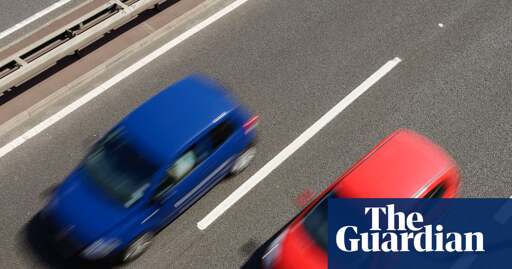
Those who use the bike know this very well: in the city, speeding motorists overtaking other cars, only get one thing: they arrive first to the next red.
With a simple model, the author estimated the probability that one car that overtakes another, will then be reached again at a later red light. Then he estimated the probability that the same thing will happen when there are multiple successive traffic lights, as usual in the cities.
The result is that as fast as an aggressive driver goes, the presence of multiple traffic lights makes it virtually certain that a slower driver will catch up
So, if someone aggressively overcomes you, when you reach him at the next traffic light, you can tell him that it is mathematically proven that he/she is an idiot.
In addition, this study has implications for the 30 km/h city, demonstrating how in urban areas the traffic lights determine the travel times, not the maximum speed reachable between one traffic light and the next.
The original scientific article is here: https://royalsocietypublishing.org/rsos/article/13/4/260310/481212/The-Voorhees-law-of-traffic-a-stochastic-model
crossposted from: https://poliversity.it/users/rivoluzioneurbanamobilita/statuses/116419204210303856
This doesn’t take into account the vast safety benefits of getting away from incompetent/inattentive drivers. I’m not necessarily passing you to “get there” faster, it’s pretty easy to tell when a driver has no clue what they’re doing and I don’t want to have anything to do with that shit.
I actually have no clue if it doesn’t take that into account, I didn’t read the article, but you see what I’m saying.
Just leave some distance with them in front of you, if they crash you have space to slow down before overtaking their burning wreck.
The options under discussion are pass and not be involved in a wreck or stay behind and wait to be involved in a wreck and somehow the second option is more appealing to you? Yeah no thanks, I’ll pass and avoid it entirely instead of waiting for it to happen, hoping it happens in a predictable & easy-to-avoid way, hoping that every other driver on the road with us is also waiting for it to happen, hoping we all have perfect reaction time, hoping all our cars respond properly, and hoping that road conditions are “ideal.” That’s a lot of luck. If you can predict how and when a bad driver is gonna crash, you go ahead and caravan with them, I know I personally can’t see the future so I’m going to get as far away as I possibly can.
Do you know how to drive behind another vehicle at a safe distance?
If you leave enough safe space between you and the next vehicle, someone is bound to get into it though.
Now that person is your crumple zone
And you need to show down more to open a safe gap with them
Yes I was a mail carrier, I’ve driven professionally. Which means I also know how to most safely and efficiently get to my destination, and neither involve being at the whims of a dangerously negligent idiot going 30 mph slower than the flow of traffic. 🤷♂️
I would rather be behind than in front of a dangerous driver.
There are different kinds of dangerous drivers. The kinds you don’t want behind you are usually either easy to pass and leave far behind or easy to let pass you. My whole premise is based around the first kind, that is driving negligently slower than the flow of traffic. Anyone staying behind them (read: you) would then also be driving negligently. Since they’re, as established, going way too slow, they are very easy to pass and get plenty of distance between without adding an extra hour onto my and every other driver’s commute.
As explained elsewhere in these replies, the biggest fear from being in front of this kind of driver is being directly in front of them and getting rear-ended at a stop when they’re not paying attention, but if I can overtake them, that means I can just stay in a different lane from them and there’s no real concern.
I find I want the incompetent/inattentive drivers far off in front of me. Behind me I have a harder time keeping an eye on them along with everyone else. Far ahead, I have a better chance of reacting and correcting to their improper driving.
Like I said I’m a different reply, It’s not in anyone’s best interest for me to go 15 to 30 mph below the flow of traffic just because I ended up behind someone who doesn’t know they’re on Earth much less operating an automobile. If there’s a legal way to pass them, I’m going to. Once they’re behind you, you only have to worry about getting rear-ended at a stop, which is only an issue in slower city traffic where it is easier to keep an eye on someone behind you. In which case, just stay in the lane you used to get around them.
If they’re driving erratically, however that’s another story and I definitely agree that I want to stay as far back from them as I can. But they’re usually speeding and my whole point is centered on the premise of being stuck behind a slow inattentive or otherwise neglegent driver. They don’t even need to be a bad driver, maybe they’re new to the area, looking for parking, having a medical issue, etc. Just pointing out that not all overtaking is about getting there first.
Oh yeah, slow drivers get ahead of I get ya.